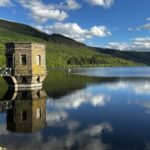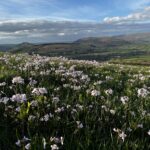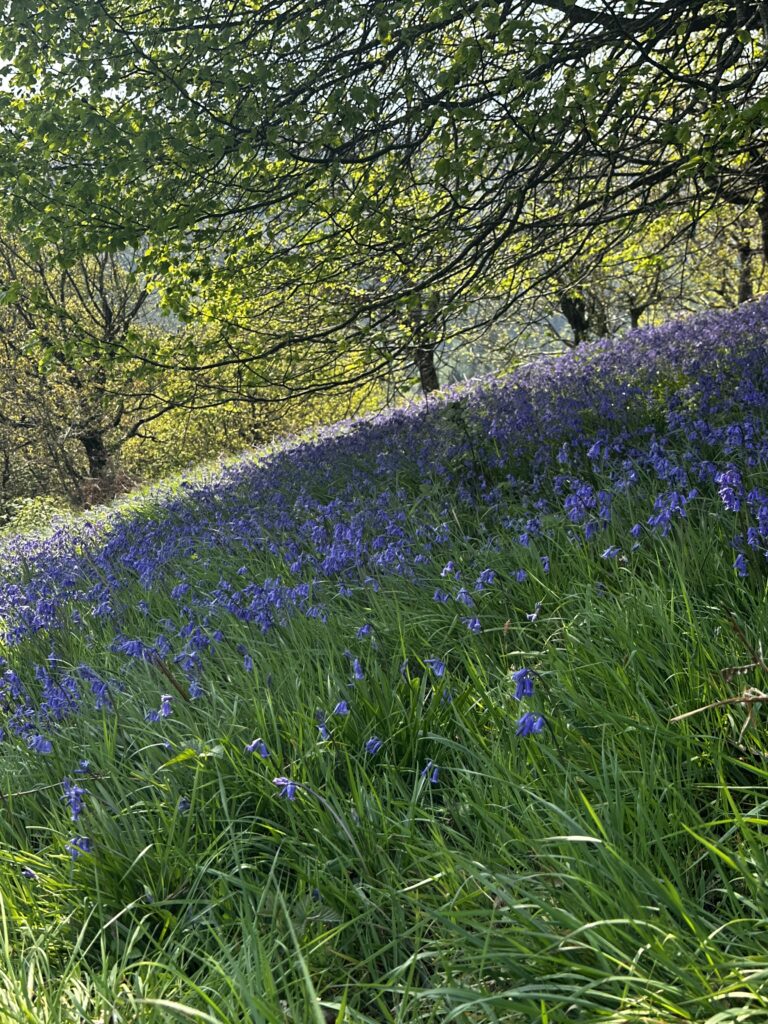
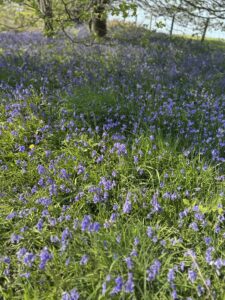
Pant Llwyd sits in its bowl of hills, and the bluebells gather where the light softens — along the hedge bottoms, under the old trees, in those quiet corners the wind forgets. They don’t shout; they glow, a blue mist rising from the ground as if the land has exhaled colour.
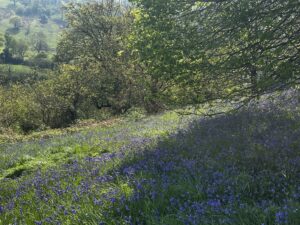
In the distance the Black Mountains hold steady, dark shoulders against the sky, and the sweep of Mynydd Llangynidr runs long and low behind them. The bluebells seem to answer those big shapes with something gentler — a hush, a softness, a reminder that even rugged ground has its tender spells.
When the evening sun drops across the farm, the bells catch the gold and the whole slope looks brushed with light. It’s the kind of moment that makes you stop mid‑stride, hand on the gate, just to take it in.
Bluebells have a sweet, light, honey‑green scent, and they’ve gathered a whole handful of old folk names over the centuries.
Each of these has a bit of folklore behind it:
Lady’s nightcap — for the drooping bell shape
Fairy flowers — bluebell woods were said to be enchanted
Cuckoo’s boots —is one of the oldest folk‑names for the bluebell, and it ties the flower directly to the arrival of the cuckoo in spring. So the flowers were said to be the little “boots” the cuckoo wore when it arrived back on British soil each spring. It’s a playful, old‑world way of marking the season turning.
Witches’ thimbles — from old beliefs about magic in bluebell woods
Crowtoes — one of the earliest recorded names. The flower spike of the native bluebell hangs its bells all down one side, each one slightly angled, so the whole cluster looks like the spread toes of a crow’s foot. Early plant‑namers loved comparing plants to animals, especially birds that were common around farms and woodland edges.